This is an adaptation of my friend’s recipe that I first tasted when I was in my 20s. She served it with fried chicken. I sometimes serve it with potato wedges or baked chicken tenders.
Ingredients
(Serves 4)
Basmati rice 2 cups
Tomatoes 6 medium
Garlic 7 cloves, crushed
Coconut oil 2 tbsps
Salt to taste
Method
Soak the rice for 10 minutes. Drain.
Blanch the tomatoes in boiling water, skin them and purée in a blender.
Heat the oil in a heavy-bottomed pan and add the crushed garlic. Fry but don’t let the garlic burn.
Add the drained rice and fry for 2 minutes.
Add the tomato purée and mix well.
Add 2 cups of water and salt to taste.
Cover and cook on low heat till the water is totally absorbed and the rice is cooked.
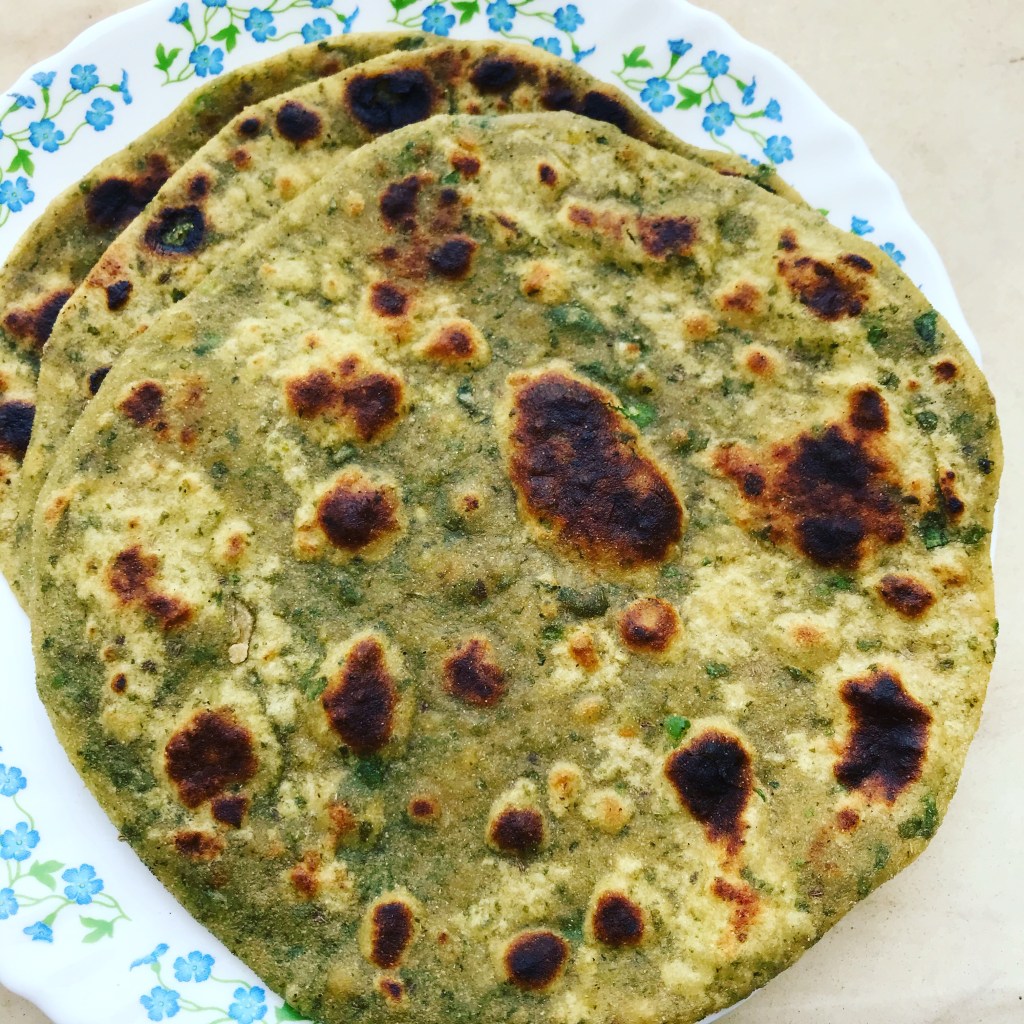
Aloo paranthas or wheat pancakes stuffed with potatoes are a favourite with most people. I have found that my friends all enjoy hot potato paranthas, irrespective of race, nationality or gender.
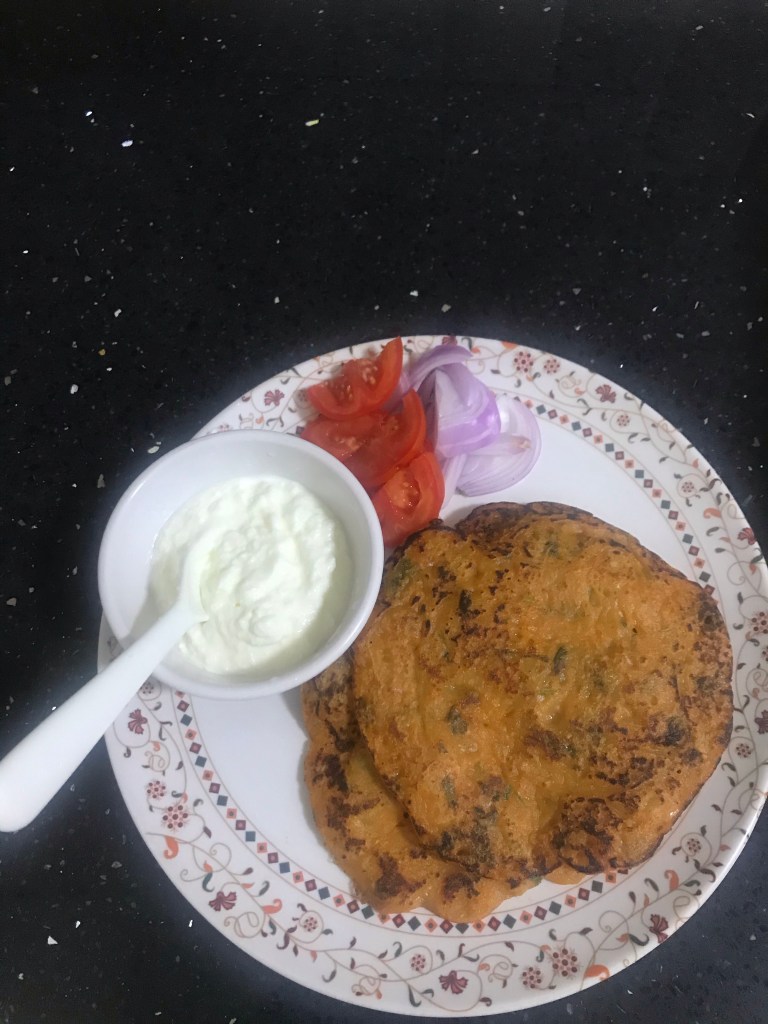
This aloo parantha can be made even if you don’t have the traditional implements — chakla or marble rolling tile, belan or rolling pin, and tawa or concave griddle. The potato stuffing is mixed into a batter of whole wheat flour and water and then made into pancakes.
Ingredients
Potato 1 large, boiled, peeled and grated
Onion 1 medium, finely chopped
Green chilli 2, finely chopped
Red chilli powder 1 tsp
Salt to taste
Coriander leaves, a bunch, chopped
Atta or whole wheat flour 1 cup
Water for batter
Oil 1 tbsp
Method
Mix the boiled potato with the onions, green chillies, salt, coriander leaves and red chilli powder and mix well. Add the oil and mash it all together.
Add water to the atta and make a smooth better. Add half a teaspoon of salt.
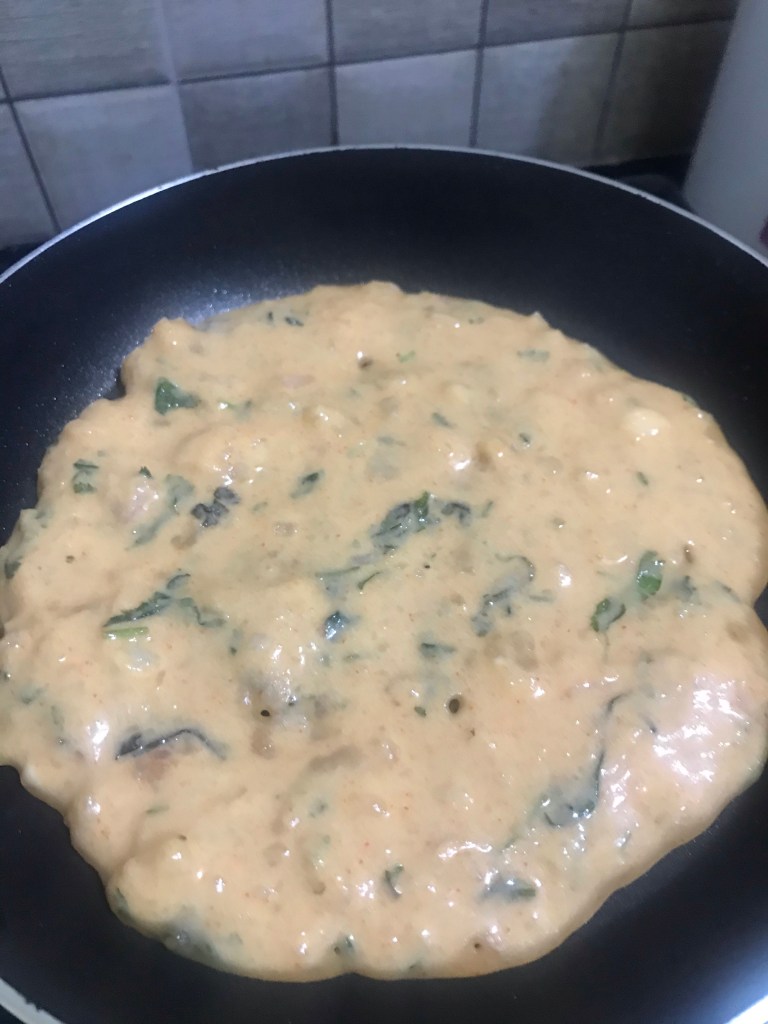
Add the potato mix to the batter and whisk well. Add more water if needed.
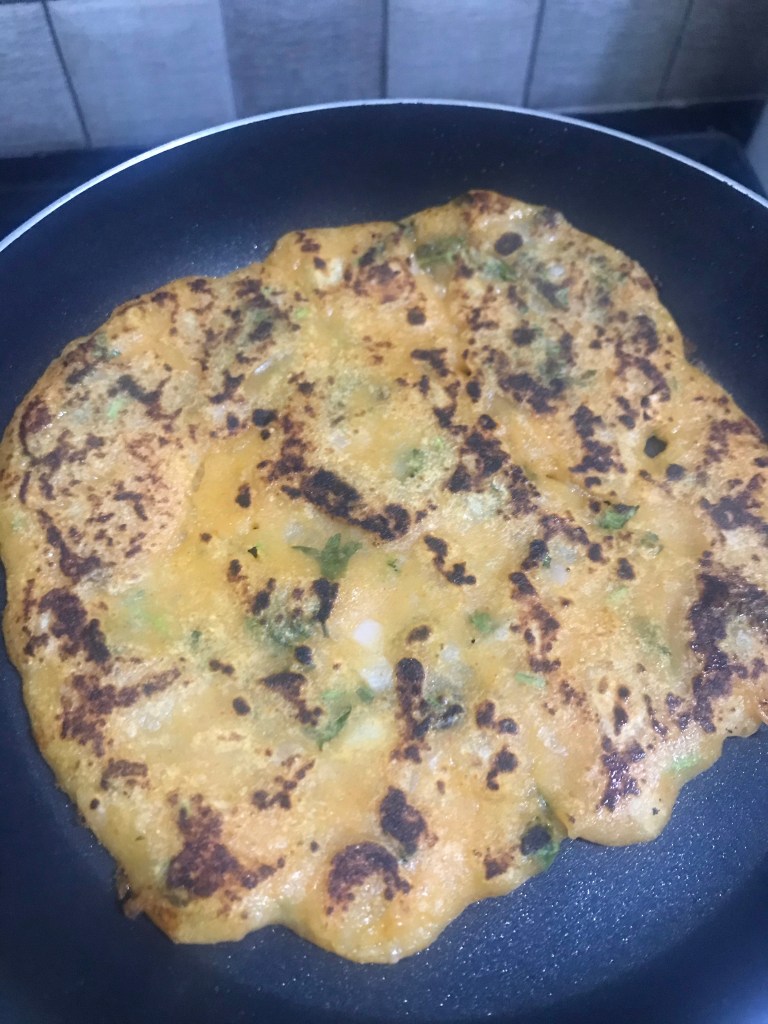
Heat a nonstick griddle and pour a ladle full of batter. Spread to make a thick pancake. Cook for a minute and flip it over. Apply some ghee and cook.
Transfer to a plate. Make similar pancakes with the rest of the batter.
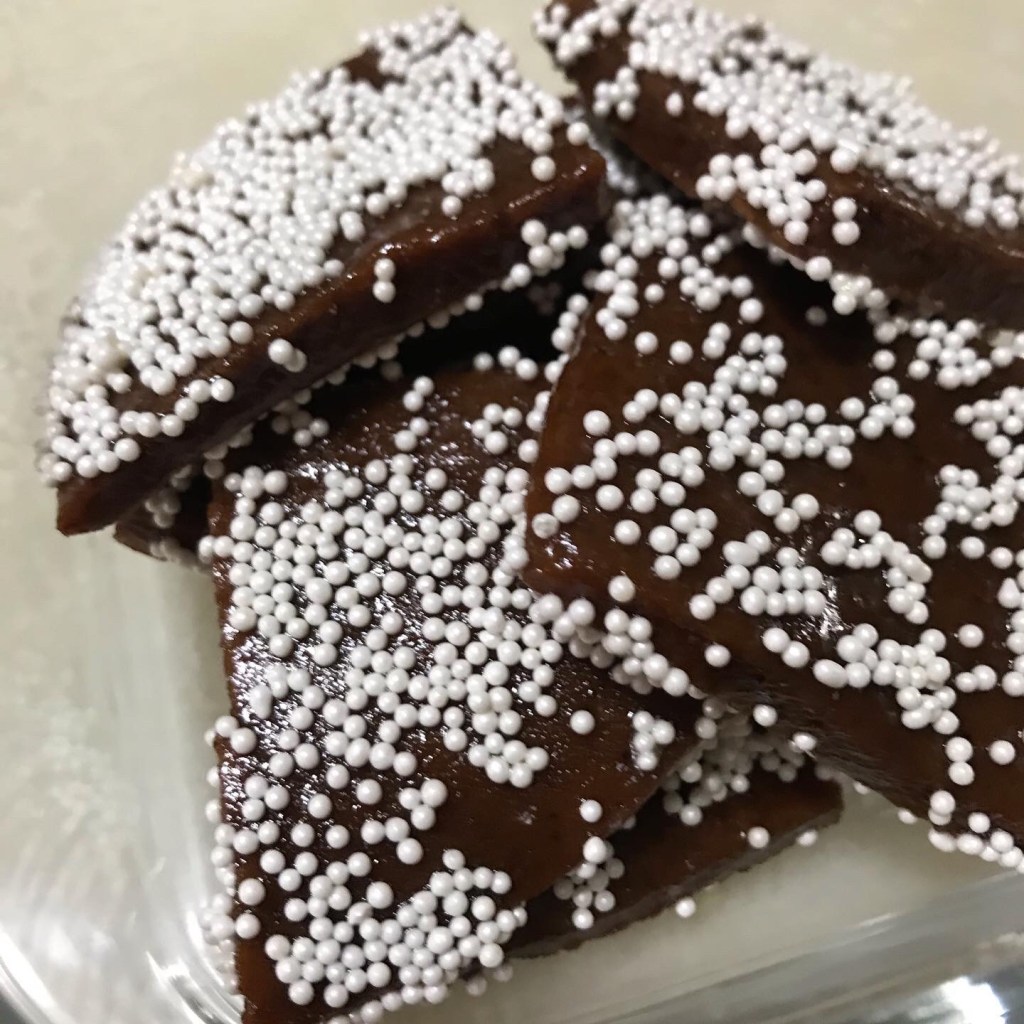
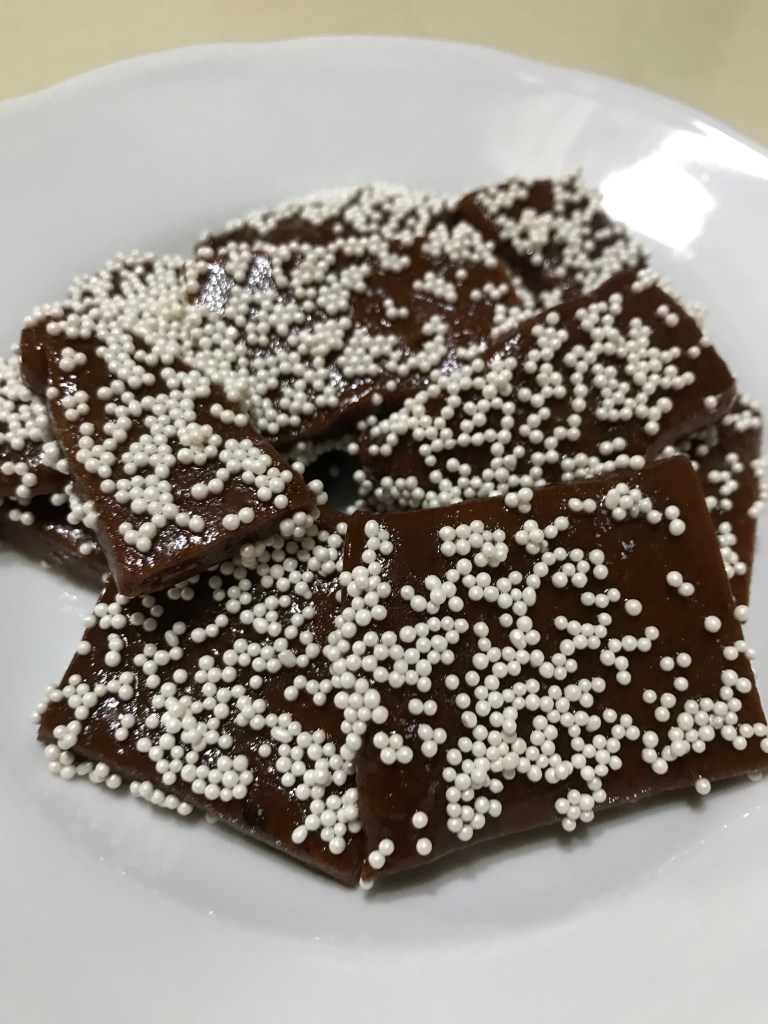
This fudgy milk sweet with a deep chocolate colour is a delicacy from the northern Indian state of Uttarakhand. It’s origins are lost in the mists of time. While some ascribe it to a local halwai in Almora, others say it came from Nepal in the 7th century A.D. and was modified by halwai Joga Lal Shah, who used milk from a particular village to make the khoya, the basis for the sweet.
This sweet needs constant attention during cooking. Prepare yourself before you start. Have a drink of water and keep your phone on silent. You can’t step away for even a second once you start cooking. Khoya burns easily and the dish will be completely spoilt.
Ingredients
Khoya 200 g
Sugar 3 tbsps
Sugar 1/2 cup
Water 1 1/2 cups
Ghee 1 tbsp
Sugar balls 2 cups
Method
Dissolve 1/2 cup sugar in 1 1/2 cups water and boil for 15 minutes. Reduce the heat, but keep the sugar syrup bubbling.
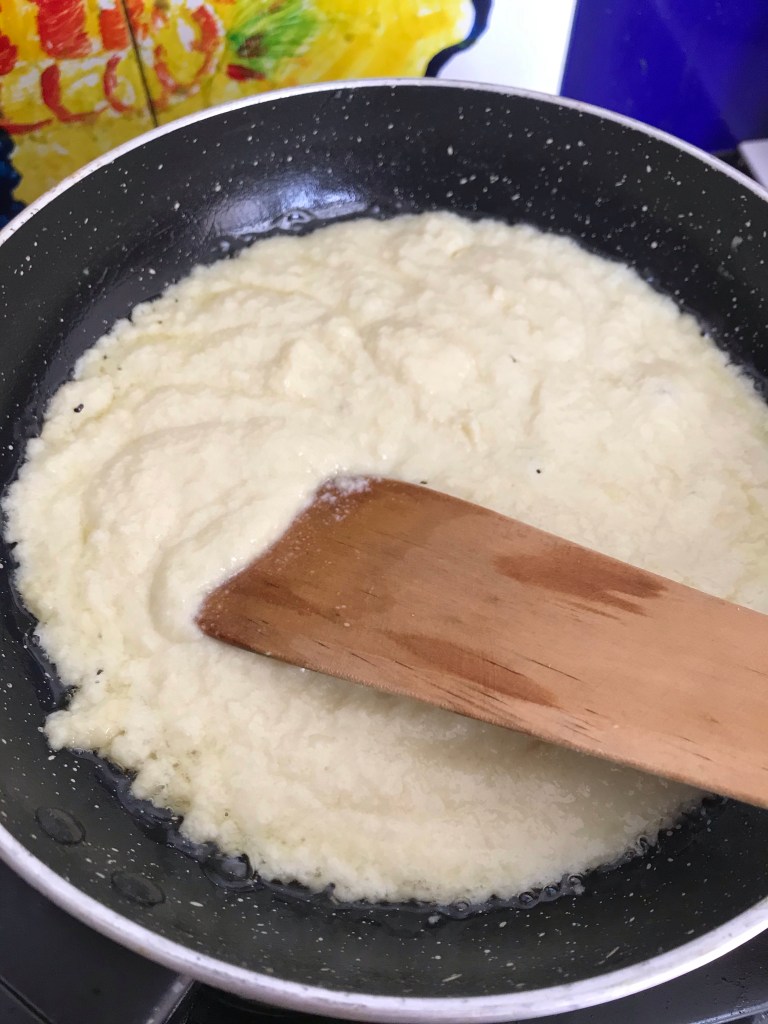
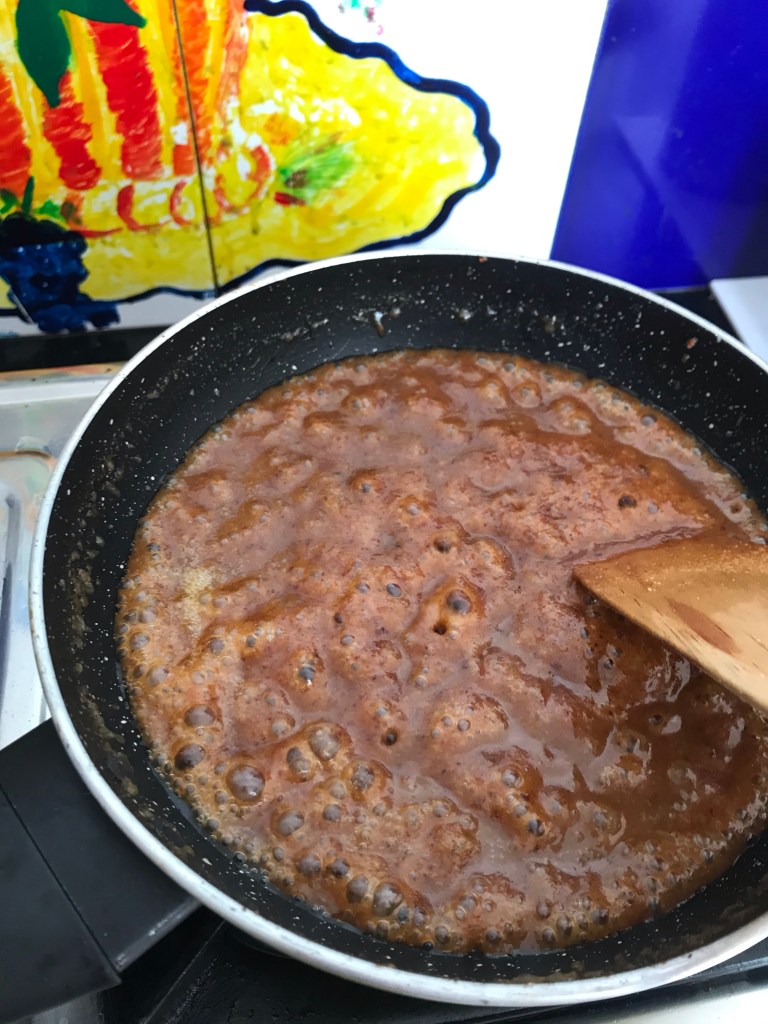
In a heavy bottomed nonstick pan, take 1 tablespoon of ghee. Add the grated khoya and start stirring. Cook the khoya on low heat. The pictures show the way the khoya will change colour. Do not stop stirring and do not increase the heat.
When the khoya is a deep reddish brown and starts to leave oil, add 3 tablespoons of fine sugar. Continue to cook for another 10 minutes.
Add some of the bubbling sugar syrup.
The khoya will turn a deep chocolate colour as you continue to cook.
Keep adding the sugar syrup a little bit at a time till only about 1/4 cup remains.
When all the water is absorbed and the mixture begins to leave the sides of the pan, transfer to a greased dish. To test if the sweet is ready, put some on a plate. If you are able to roll it off easily, it is ready.
When it is cool, cut into squares. Dip each square in the sugar syrup and roll it in the sugar balls to coat all sides.
The sweet can be stored in an airtight container for up to a week.
Traditionally Mutton Rogan Josh, a delicacy from Kashmir, is made by cooking lamb in clarified butter or ghee. Of Persian origin, rogan means oil and josh means passion, just as it does in Hindi. The intense red colour of the curry comes from a herb called ratan jot or alkanet. I don’t use it in my recipe, however. Also, I have used a mix of vegetable oil and ghee instead of just ghee, which I find too rich. I use mutton or goat meat instead of lamb. This is leaner, has more minerals and less cholesterol. I use whole fennel seeds instead of the powder as I love the taste better. I also use a pinch of turmeric, something I use for all meat dishes because of its antiseptic quality.
Ingredients
Mutton (goat meat) 1/2 kg
Onion 1 large, sliced
Ginger 1” piece
Garlic 5 cloves
Bay leaf 1
Garam masala 2 tsps
Red chilli powder 3 tsps
Fennel seeds 1 tbsp
Ginger powder 1 tbsp
Turmeric 1/4 tsp
Yoghurt 1/2 cup, whisked
Saffron a few strands
Vegetable oil 1 tbsp
Ghee 1 tbsp
Salt to taste
Coriander leaves for garnish
Method
Add the oil and ghee to the pressure cooker and add the onions. Cook on low heat till the onions turn golden brown and caramelise. This will take 10-15 minutes. Do not hurry this process. Stir often.
Make a paste of the red chilli powder, fennel seeds and ginger powder with a little water.
Crush the ginger and garlic in a pestle to make a rough paste.
When the onions are done, increase the heat and add the ginger-garlic paste as well as the bay leaf. Sauté for 2-3 minutes.
Add the mutton pieces and fry for a few minutes. Add the chilli paste and mix well. Add the turmeric powder.
Add the saffron to the whisked yoghurt and add to the mutton. Add salt and mix well.
Cook till the oil begins to leave the sides of the pressure cooker.
Add 1 tsp of garam masala powder. You can either make it yourself from the whole spices or buy it from any Indian store.
Add about 1/2 cup water and close the lid. Cook on high heat for six whistles. Reduce the heat and cook for 10 minutes. Switch off the heat and let the steam release gradually.
Open the pressure cooker, add 1 tsp of garam masala and cook on medium heat for 5 minutes.
By now the mutton should be tender and almost falling off the bone. Test with a fork and if needed, cook a few minutes longer.
Garnish with coriander leaves and serve with rice or roti or naan.
The best palak paneer I have had is from a restaurant called Moti Mahal, not far from where we grew up in Delhi. I had to try a few times before I developed this version that is quite close to the taste I remember from my childhood.
Ingredients
Spinach leaves 1/2 kg, washed, steamed and puréed
Onion 1 medium, sliced fine
Garlic 6 cloves, sliced in half
Ginger 1” piece, julienned
Tomato 1 medium, sliced fine
Red chilli powder 1/2 tsp
Turmeric powder 1/2 tsp
Coriander powder 1/2 tsp
Salt to taste
Water 3 cups
Paneer or cottage cheese 200 g, cut into cubes
Oil 4 tbsp
Method
Heat the oil in a heavy bottomed pan and fry the paneer cubes till they turn a light crispy brown. Take them out with a slotted spoon and keep aside.
Add onion slices to the same oil and fry till they turn golden and translucent. Scrape the paneer bits as you fry the onions.
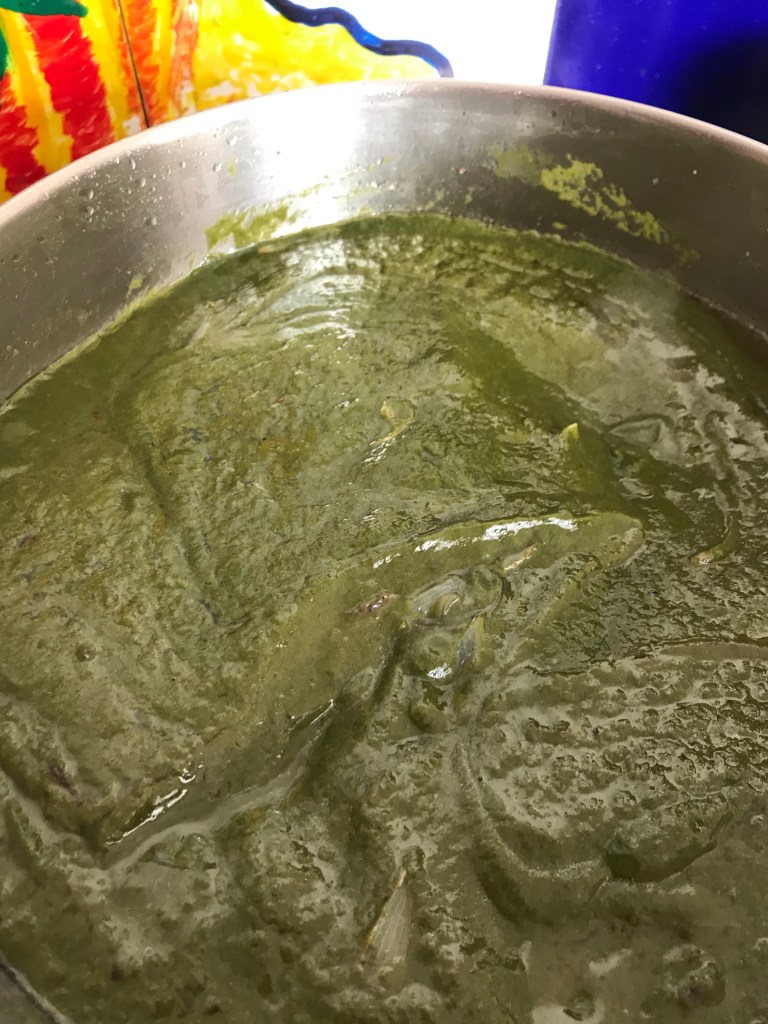
Add the puréed spinach and stir well.
Add the water, salt, red chilli powder, turmeric powder and coriander powder.
Add the garlic. Use the smaller Indian garlic instead of the plumper Chinese ones. They have more flavour.
Add the tomato slices.
Reduce the heat and cook covered for 20 minutes.
Add the fried paneer cubes and continue to cook till the gravy thickens.
Garnish with the julienned ginger and serve hot with rice, naan, puris or paranthas.
The fresh light-as-air buns go very well with a mixed vegetable curry that is slow cooked and mashed. A street food from the western part of India, this dish is great for any meal— breakfast, lunch or dinner. It is a lovely snack as well.
Ingredients
For the pav (buns):
Milk 1 1/4 cup
Yeast 2 tsps
Sugar 2 tsps
All-purpose flour (maida) 2 cups
Whole wheat flour (atta) 1 cup
Salt 1 tsp
Butter 2 tbsps + 1 tbsp
For the bhaji (vegetable curry):
Potatoes 2 large, peeled and diced
Peas 3 cups
Cauliflower 1 small, cut into florets
Tomatoes 3 medium, chopped
Green chillies 3, minced
Capsicum 1 medium, diced
Onions 2 medium, sliced and 1 small, minced
Ginger 1” piece
Garlic 5 cloves
Coriander leaves, a big bunch, minced
Oil 1 tbsp
Cumin seeds 1 tsp
Salt to taste
Butter 1 tbsp
Coriander powder 2 tsps
Red chilli powder 2 tsps
Turmeric powder 1/2 tsp
Cumin powder 1 tsp
Garam masala 1/2 tsp
Amchoor powder (dry mango powder) 1 tsp
Method
For the pav:
Take one cup of warm milk in a bowl and add the sugar and yeast. Mix and let it prove for 5 minutes.
Sieve the flours and salt together and add to the yeast mixture. Mix to form a dough. Add 1/4 cup of milk to the dough and work it on a lightly floured surface for 10-12 minutes.
Add 2 tablespoons of softened butter and knead the dough till it is soft.
Put it into a greased bowl, cover and let rise in a warm place for 2 hours. It should double in volume by now.
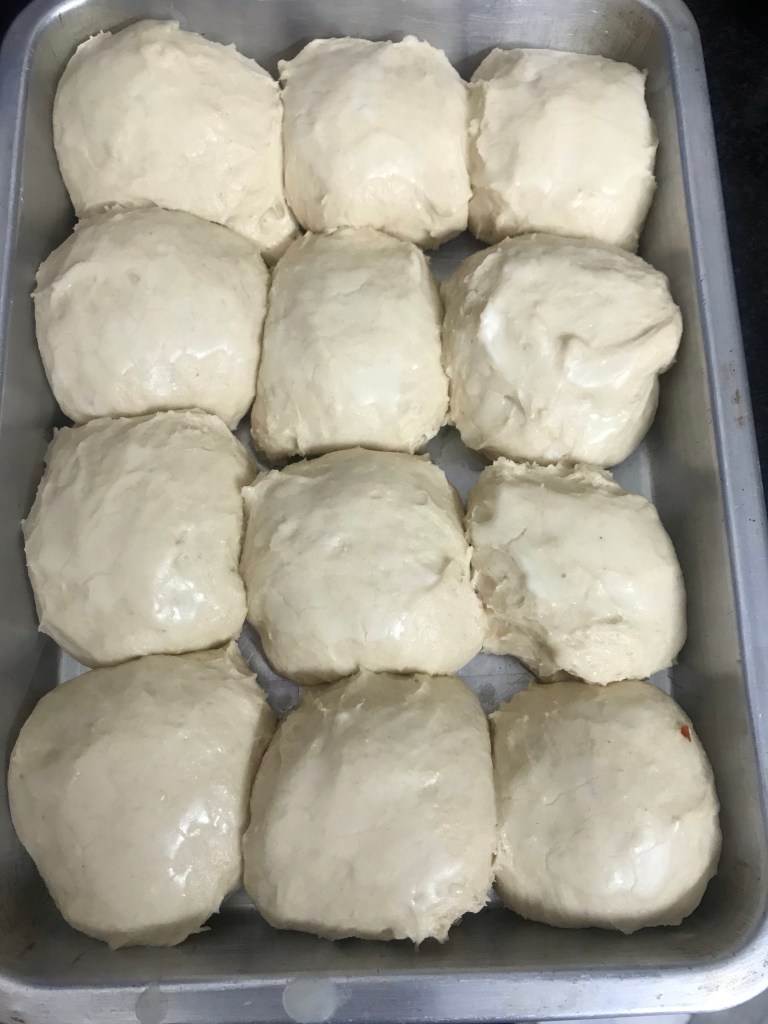
Punch down the dough and divide into 12 balls.
Arrange them on a greased baking tray and brush with melted butter.
Cover and let it rise again for 20 minutes.
Bake in a 180 degree C oven for 20 minutes. Brush the hot buns with melted butter. Let them cool in the tray.
Pull the buns apart when ready to serve.
For the bhaji:
Heat the oil in a heavy bottomed pan and add the cumin seeds.
When the seeds stop sputtering, add the sliced onions.
Sauté till the onions turn a light brown. Crush the ginger and garlic in a pestle and add to the onions. Sauté for 2 minutes.
Add the diced potatoes and sauté for 2 minutes. Add the cauliflower florets, peas, capsicum and tomatoes.
Add the salt, coriander powder, red chilli powder, amchoor powder, turmeric powder, garam masala and cumin powder.
Mix well. Add 3 cups of water and cook on high flame till the water boils. Reduce the flame, cover the pan and cook till the vegetables are cooked.
Mash the the vegetables with a potato masher but don’t make it completely mushy.
Cook till the vegetable medley is thick. Garnish with butter, minced onions, green chillies and coriander leaves.
This combination of fried Indian bread made from all-purpose flour and chickpea or garbanzo bean curry is a favourite across the country. It is easy to make as well. I have broken down the recipe into workable bytes.
Ingredients
For the chole (chickpea curry)
Kabuli chana (dry chickpea or garbanzo beans) 1 cup
Onions 1 large, sliced
Tomatoes 2 medium, sliced
Green chillies 2, slit
Potatoes 2 medium, cubed
Coriander powder 2 tbsps
Red chilli powder 2 tsp
Turmeric powder 1/2 tsp
Amchoor powder or dry mango powder 1/2 tsp
Garam masala 1/2 tsp
Salt to taste
Coriander leaves for garnish
Ginger 1” piece
Garlic 5 cloves
Oil 2 tbsps
Baking soda 1/2 tsp
For the Bhature (fried bread):
All-purpose flour 3 cups
Yoghurt 5 tbsps
Baking soda 1/2 tsp
Baking powder 1 tsp
Salt to taste
Oil 1 tbsp
Oil for frying
Method
Soak the chickpeas or garbanzo beans overnight. Wash and drain the chickpeas and steam along with the baking soda in a pressure cooker. Let it cook for four whistles on high flame and one on low flame. Switch off the heat and let the pressure release naturally.
Pound the ginger and garlic in a pestle to make a crushed paste.
Heat oil on a heavy bottomed pan and sauté the onions till they become transparent.
Add the ginger-garlic paste and sauté till the raw smell disappears.
Add the steamed chickpeas with 2 cups of water.
Add the turmeric powder, coriander powder, red chilli powder, amchoor and salt.
Add the tomatoes, potatoes and green chillies.
Cover and cook on medium heat till the potatoes are cooked. Add water if needed.
When the potatoes are done, add the garam masala and cook for two minutes more.
Garnish with coriander leaves and serve.
Sift the all-purpose flour, baking soda, baking powder and salt into a bowl.
Add the yoghurt and make into a soft dough. Add water if needed.
Add 1 tbsp of oil and knead the dough for two minutes.
Cover and let rest for an hour.
Make into small lemon-sized balls.
Roll out on a lightly floured surface into circles and deep fry in hot oil. Ensure the oil is hot, but not smoking. Test with a small piece of dough and it should immediately rise to the surface. This will ensure that the Bhature are not oily.
Serve hot bhaturas with the choley and sliced raw onions.
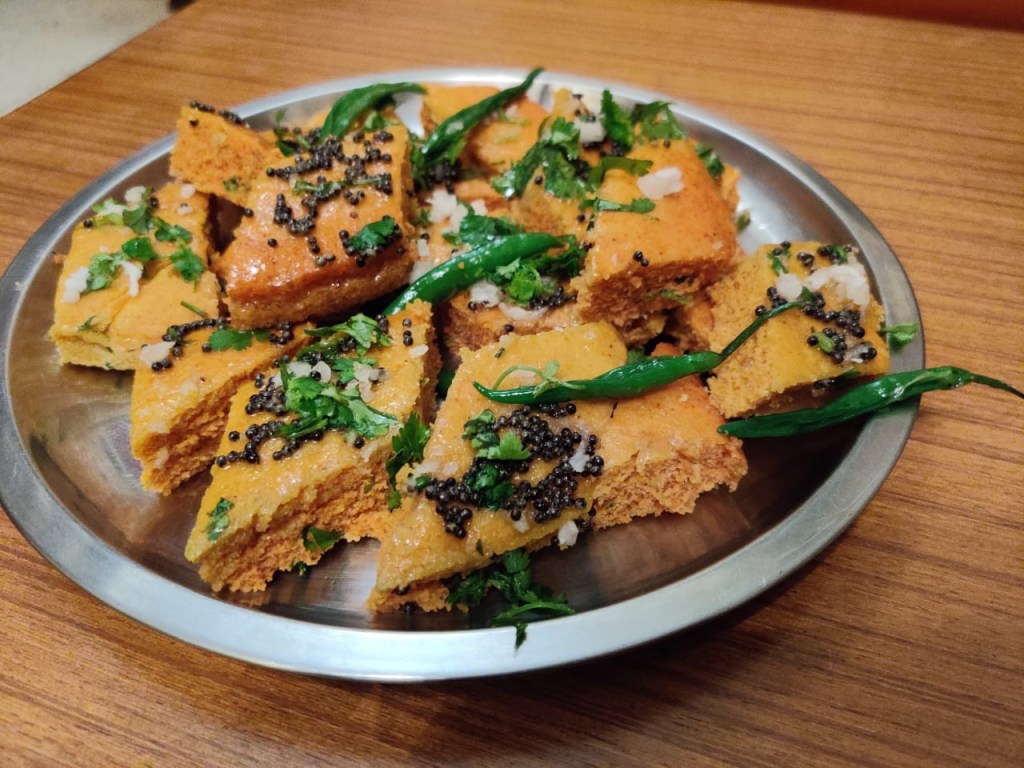
This is actually known as just khaman in Gujarat, but as a pan-Indian dish it is known as dhokla. Filled with protein, this is a light snack that is good any time of the day.
Ingredients
(Serves 5)
Chickpea flour or besan 1 cup (136 g)
Semolina or suji 1 tbsp
Turmeric 1/2 tsp
Water 3/4 cup
Sugar 1 tsp
Oil 1 tbsp
Lemon juice 1 tbsp
Salt 1/2 tsp
Baking soda 1 tsp
Ginger 1” piece
Green chillies 3
Grated coconut 1 tbsp
For tempering:
Mustard seeds 1 tsp
Oil 1 tbsp
Sugar 1 tsp
Curry leaves few sprigs
Coriander leaves for garnish
Asafoetida 1/2 tsp
Salt 1/2 tsp
Green chillies 5
Method
Mix the chickpea flour, suji, baking soda and turmeric together in a bowl.
In another bowl mix the water, oil, sugar, salt and lemon juice. Stir well till the sugar dissolves.
Add to the dry ingredients and whisk well to form a batter.
Pour into a greased tray and steam for 20 minutes.
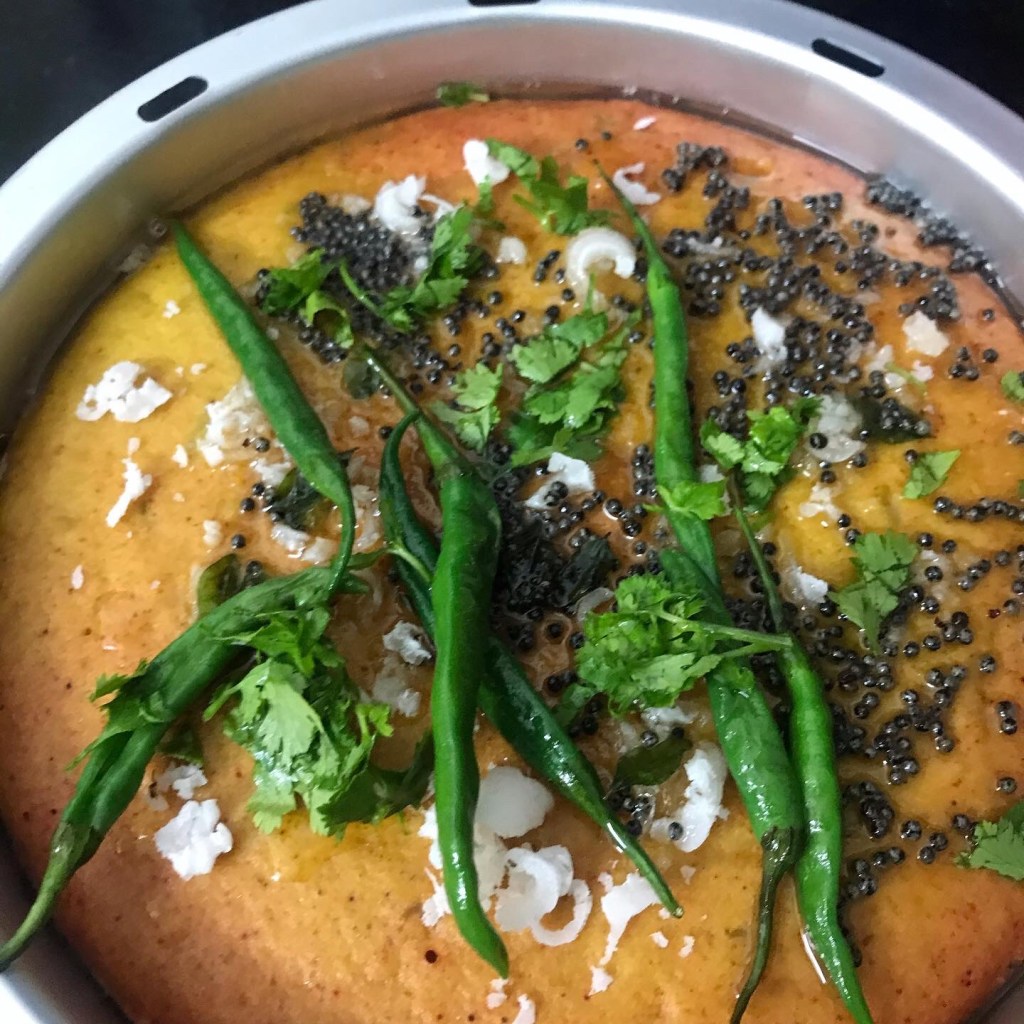
Heat oil in a frying pan and add the mustard seeds. When they stop sputtering, add the curry leaves and asafoetida. Add the asafoetida and salt and add three tablespoons of water. Stir till the sugar dissolves. Add the green chillies and cool for two minutes.
Pour over the cooked dhokla. Garnish with scraped coconut and coriander leaves.
Butter Chicken is a favourite dish from northern India that has become popular across the globe. Traditionally, it is made with a lot of butter and cream, but I have cut the quantity of oil, butter and cream for a healthier but still tasty version of the dish.
Ingredients
Chicken 1/2 kg, boneless cubes
Red chilli powder 2 tbsps
Turmeric 1/2 tsp
Ginger 2” piece
Garlic 10 cloves
Oil 2 tbsps
Butter 2 tsps
Cream 1 tsp
Tomatoes 4 medium, roughly sliced
Onion 1 large, roughly sliced
Cashew nuts 8-10
Kasoori Methi 1 tbsp
Garam masala 1 tsp
Apple cider vinegar 1 tbsp
Salt to taste
Method
Make a paste of the ginger and 5 garlic cloves.
Marinate the washed chicken cubes with 1 tablespoon of red chilli powder, salt, turmeric, apple cider vinegar and the ginger-garlic paste. Let it rest for 15-20 minutes.
Heat the oil in a heavy bottomed pan and fry the marinated pieces till the surface changes colour. This will take about 2 minutes each side. Keep it aside.
Add 1 tablespoon of butter to the oil and add the the onions. Fry the onions till they become transparent.
Add the tomatoes and cashew nuts.
Crush the rest of the garlic and add to the pan.
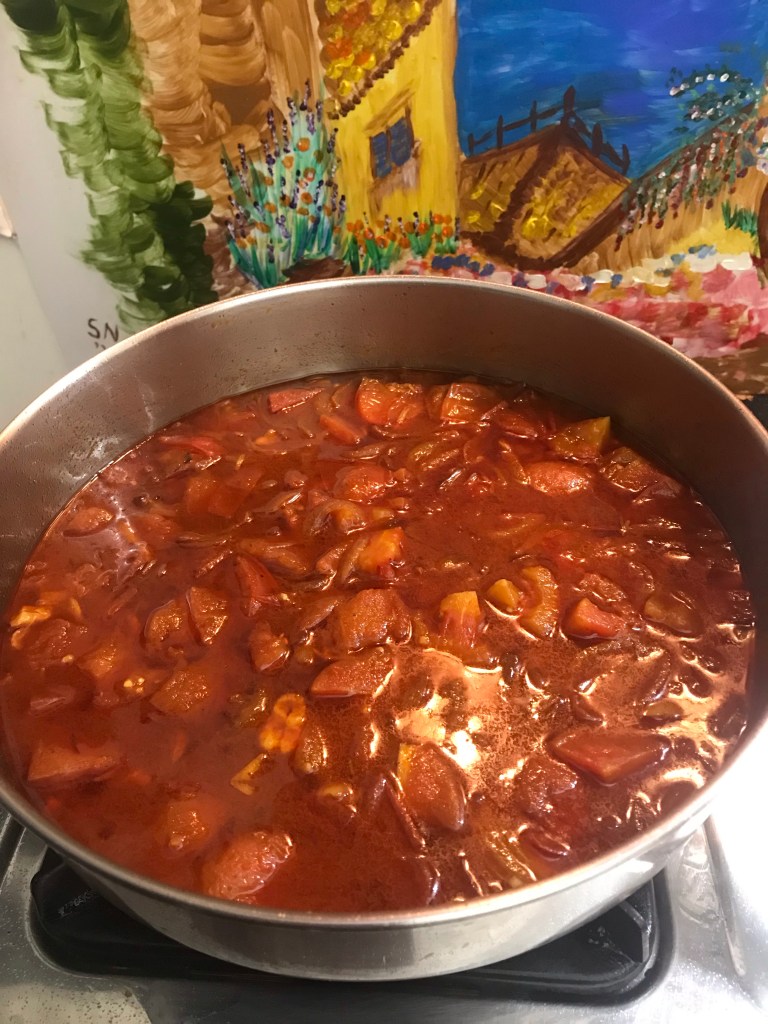
Add salt, the rest of the red chilli powder and garam masala. Add 2 cups of water and cook on medium heat till the tomatoes become mushy. This will take about 10-15 minutes.
Cool the mixture for about 10 minutes and blend well in a mixer or with a hand-held blender. I use my Braun hand blender.
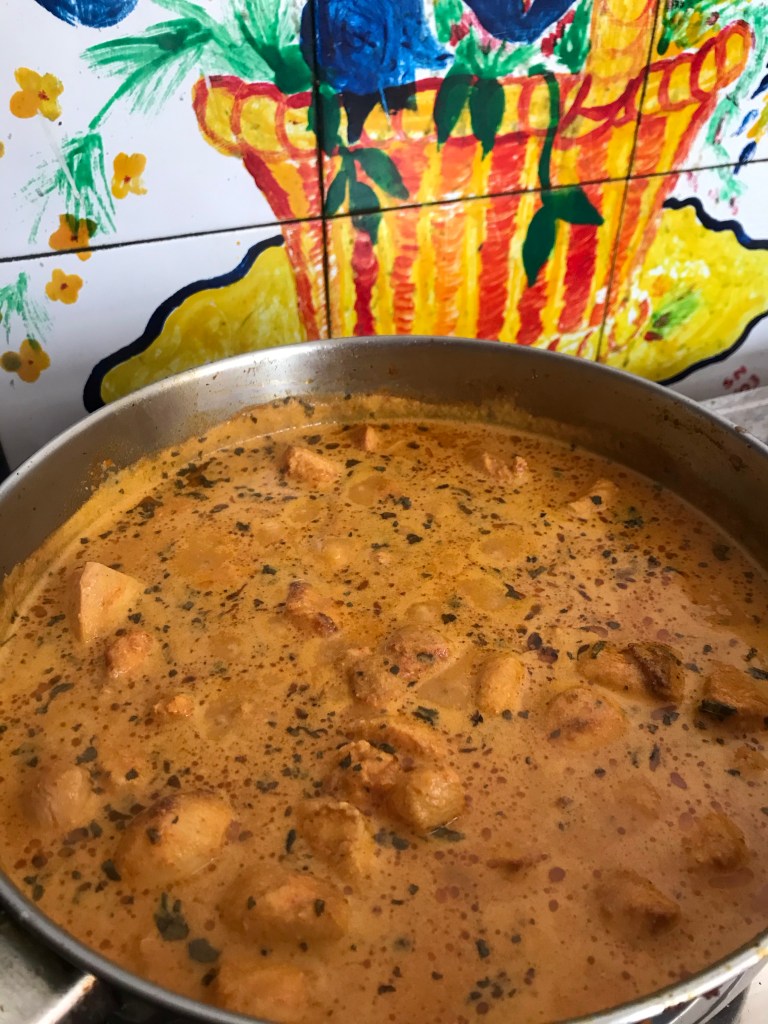
Strain the blended mixture back into the pan. Add the rest of the butter, the cream, the fried chicken cubes and the kasoori methi. Heat through for five minutes.



















 Chills & Chillies