I feel that tomato soup is like the Indian dal — there are as many ways of preparing it as there are people in the world. And each recipe is unique. With winter setting in, there is nothing more comforting than a bowl of hot tomato soup.
This particular recipe I learnt from a friend when we were schoolgirls. I have adapted it to my taste and it became a family favourite, especially with my mom.
Healthy cup of warmth and taste
Ingredients
(Serves 2)
Tomatoes 6 large Potato 1 large Spring onions 6 Red chilli powder 1/2 tsp Salt to taste Bread 4 slices, cut into croutons Butter 2 tbsps
Method
Wash the tomatoes. Peel the potato. Clean the spring onions.
Steam them whole in a pressure cooker with 2 cups of water.
Peel the steamed tomatoes. Add the steamed vegetables to a blender and grind.
Transfer to a wok and add the red chilli powder and salt. Add water from the steamed vegetables if needed. Bring to a boil, stirring it continuously. Simmer for four minutes. Switch off the heat.
Add a tablespoonful of butter to a frying pan and toss the bread croutons on high heat for about three minutes.
Serve the soup in a bowl with a blob of butter and the croutons. Enjoy!
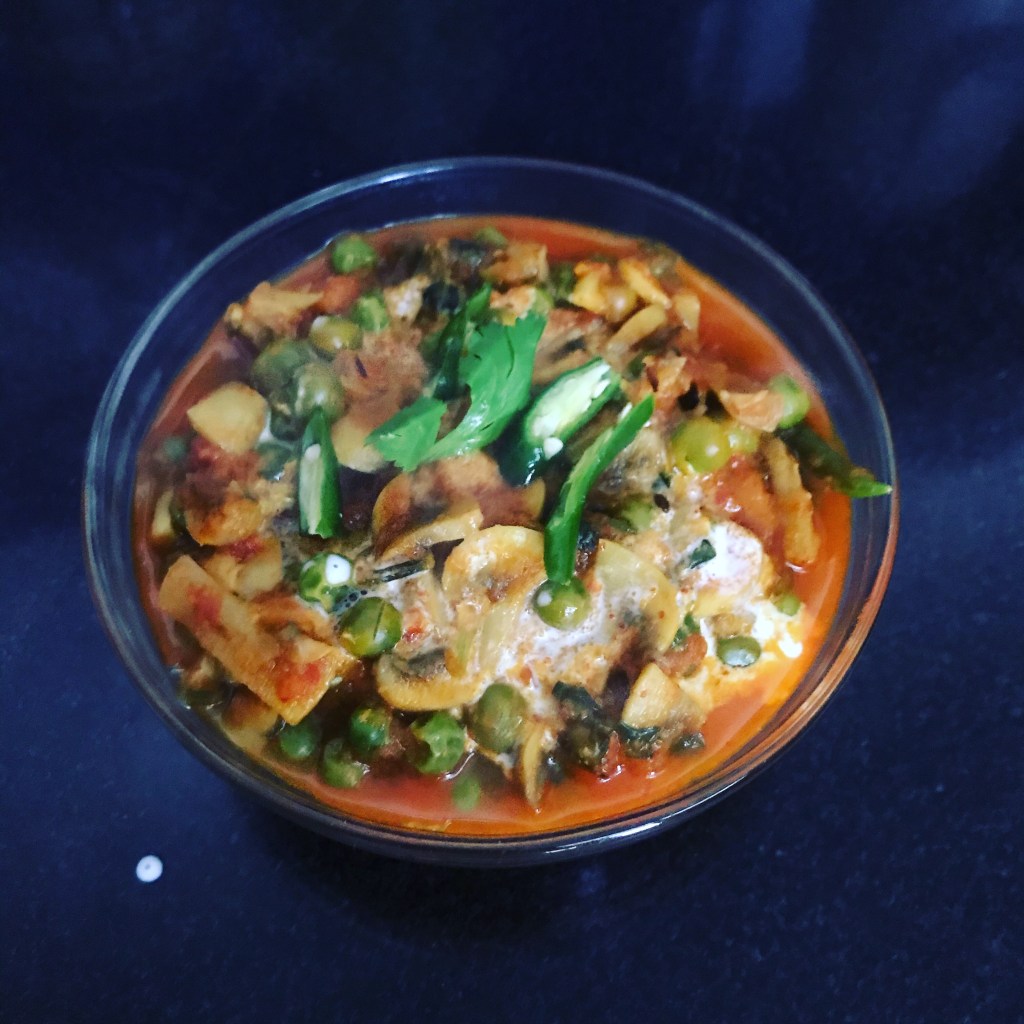
The combination of mushrooms and peas in a delicately flavoured tomato gravy is delicious. This is a dish that I fell in love with when I was a young girl. I loved the version of this curry sold at a restaurant called Chic Fish near my home. I have experimented till I have managed to get the same taste and texture.
Mutter-mushroom Curry
Ingredients
Peas 1 cup, fresh or frozen Button mushroom 250 g, sliced Onion 1 large, roughly chopped Tomatoes 2 large, roughly chopped Garlic 4 cloves Ginger 1” piece Green chillies 2, sliced on a slant Red chilli powder 1 tsp Turmeric powder 1/2 tsp Cumin seeds 1/2 tsp Oil 1 tbsp Salt to taste Coriander leaves for garnish Cream 1 tbsp for garnish
Method
Grind the onion, tomato, garlic and ginger to a fine paste.
Pour oil into a hot wok and add the cumin seeds. When they stop sputtering, add the ground paste. Sauté till oil begins to leave the sides of wok.
Saute till oil leaves the sides of the pan
Add the red chilli powder and turmeric powder. Fry for 1 minute on medium heat.
Add the mushroomsAdd the peas
Add the peas and mushrooms. Add salt and 1 cup water. Bring to a boil and reduce the heat. Cover and cook for 5-8 minutes till the peas and mushrooms are cooked. The gravy would have thickened as well.
Take the curry into a serving dish and garnish with the cream, coriander leaves and sliced green chillies.
Reads & Eats, an online publication on food is looking for articles and will pay $100 for an article of 1,250 words.
This is what the founder Yi Shun Lai has to say on submitting to Reads & Eats.
In July, I started a new publication called Reads & Eats. (View it here.) Each month, I pen an essay about an American food I’m obsessed with, from club sandwiches to Long John Silver’s crumbly bits and everything in between. I also feature an emerging writer. It’s my way of sharing my platform as a published writer and professional editor.
Here’s what you need to know to submit to Reads & Eats.
You must be:
An emerging writer with fewer than five paid publications. None of these publications should be a book.
Marginalized (I do not ask for proof or anything like that.)
Your submission must be:
A work of either fiction or nonfiction prose
1250 words or fewer
Pasted into the body of your email
About food in some way
E-mailed to readseats@gmail.com
I accept 25 submissions per month. If I have reached this cap, you will get an autoreply. Please wait until the 8th of the following month to submit again.
Writers get paid $100, and I buy first Internet and Online Rights for two months. After that, all rights revert to you. Please reference Reads & Eats in future publications. You also get a free yearlong submission to Reads & Eats.
I know there are many food lovers out there who also like to write. Whenever I find any opportunities that are related to writing about food and drink, I will post it here.
This week, YesMore Drinks Marketing Agency is looking for a Content Writer. Here is what they are seeking according to their own description:
We’re looking for a passionate and knowledgeable candidate who can write with flair on the marketing landscape today’s alcohol brands must navigate.
We’re looking for monthly blog posts as well as ghost-written pieces for PR on the challenges brands are facing and the constant changes we’re seeing in the industry. Anything from the effects of the pandemic on the UK’s pub and restaurants to younger demographics who (according to some news sources) are drinking less and less.
We hope to work with a candidate who can develop a unique tone of voice for the agency and who has an interesting opinion and angle to take on stories and changes in the market. We have an extensive list of topics to cover but would love to have ideas pitched to us on concepts you would like to be writing about also.
All planned articles (these are articles we already know we’d like written) will have a setlist of keywords to be placed within the article as well as a list of interlinks within the company sites. So being able to incorporate these in a seamless fashion will be required. Posts will need pairing with a small amount of stock photography and formatted to go live within the companies WordPress blogs. So knowledge and experience with WordPress and a keen eye for a good image will be key.
DELIVERABLES
• 6 Blog posts per month (750 words per post) • 2 PR pieces reacting to news per month (length varies) • At least 2 LinkedIn posts a month
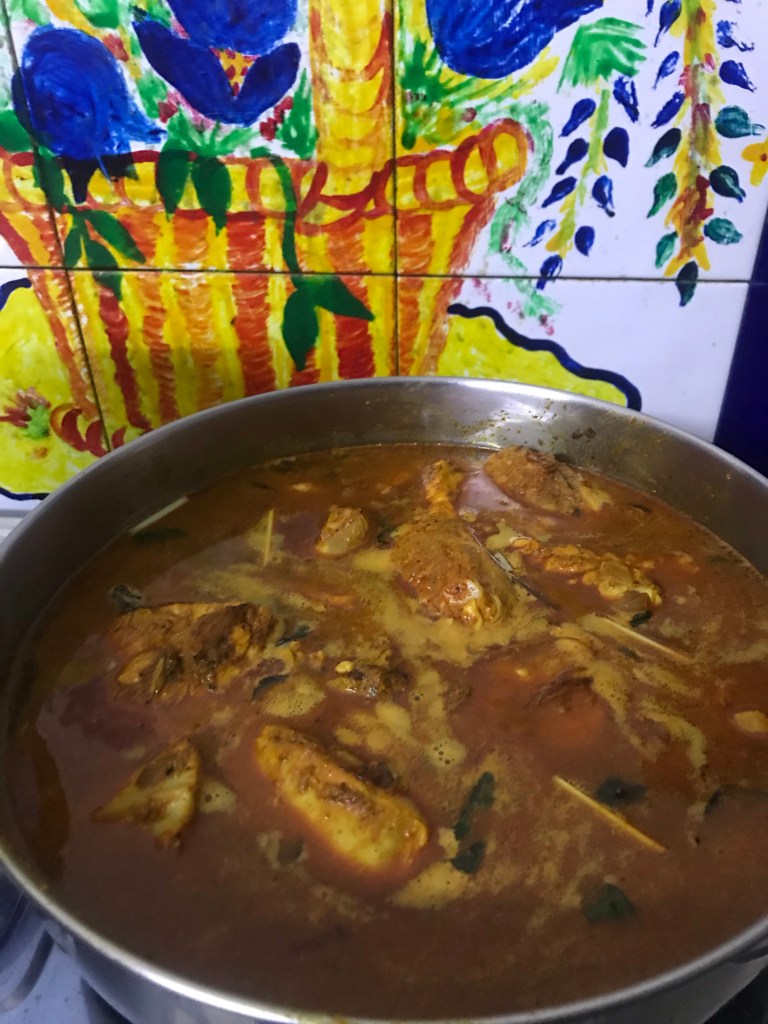
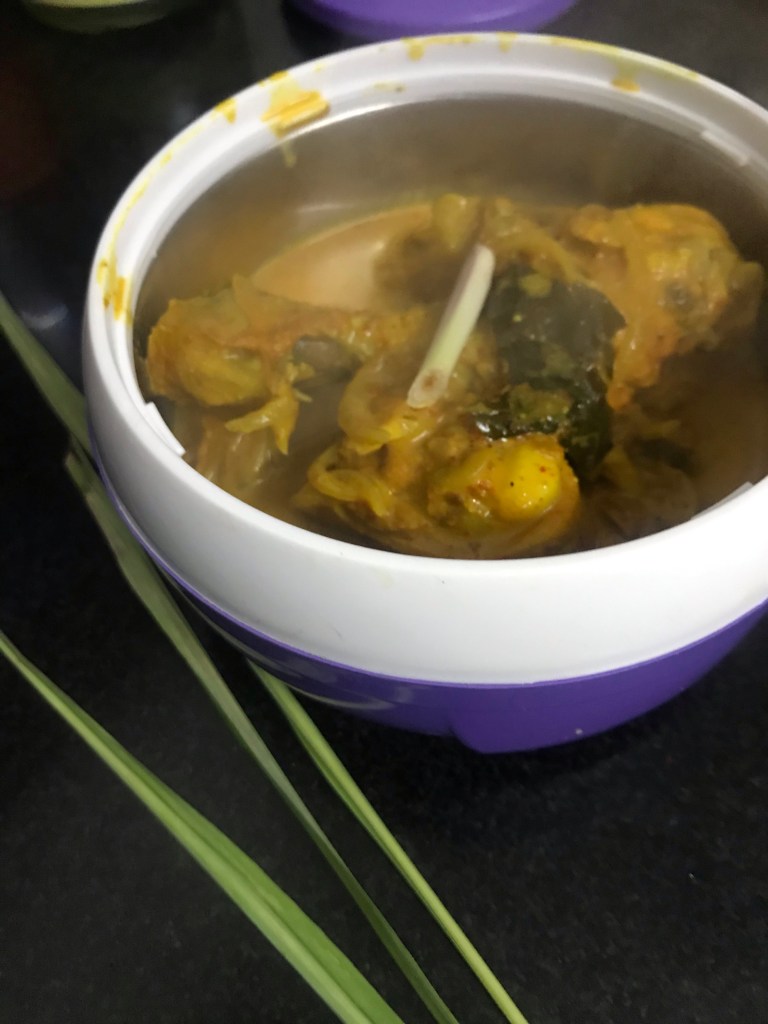
I was inspired to make this curry by the fresh chillies that the vegetable vendor delivered today. This is somewhat similar to Kerala chicken curry, but still has its unique flavour thanks to the spices used and the lemon grass.
Spicy goodness
Ingredients
(Serves 2 persons)
Chicken 500 g, curry cut and marinated
For the marinade: Vinegar 1 tbsp Red chilli powder 1 tbsp Coriander powder 1 tbsp Turmeric 1/2 tsp Pepper 1 tsp Salt to taste
For the ground curry masala, dry roast the following: Mustard seeds 1 tsp Cumin seeds 1 tsp Coriander seeds 1 tsp Whole red chillies 3 Peppercorns 1 tbsp Rice 1 tbsp Cloves 2 Fennel seeds 1 tsp Curry leaves few sprigs
For the curry: Onion 1 large, sliced Curry leaves few sprigs Ginger 1″ piece Garlic 4 cloves Green chillies 3, chopped Cinnamon 1″ piece Cloves 2 Coriander powder 1 tsp Red chilli powder 1 tsp Turmeric 1/2 tsp Lemon grass 2 sprigs Coconut oil 2 tbsps Salt to taste Water as needed Coconut milk 1 carton
Method
I have followed the Kannamma Cooks recipe for the most part, though I have modified it according to my family’s tastes. I have left out ginger-garlic paste from the marinade. It is there in the curry and I didn’t want the taste to be overpowering. I have also left out the pandan leaves as it is not easily available at my supermarket, especially in the time of a pandemic.
Marinate the chicken for at least two hours.
Grind the dry roasted spices to a fine powder and keep aside.
Crush the ginger and garlic together in a pestle.
Pour the coconut oil into a wok and add the onion slices. Fry till they become translucent. Add the curry leaves and green chillies. Add the ginger-garlic paste. Fry till the raw smell of the garlic disappears.
Add the coriander powder, turmeric, red chilli powder and pepper powder. Saute for a minute and add the marinated chicken. Add 2 tablespoons of the ground masala powder. Add two cups of water and let it boil. Add the lemon grass and cook the chicken on a medium flame till cooked.
Cook on medium heat till the chicken is cooked and the gravy thickens
Add the coconut milk and let it come to a boil. I use Dabur Homemade or Kara coconut milk, which I feel adds a delicate flavour to the curry. Switch off the heat.
Thanks to Covid-19, all of us have been binge- watching old favourites on Netflix, Amazon Prime and Disney Hotstar. I have recently been immersed in Covert Affairs, something I used to watch in the later part of the last decade. Apart from the thrills and the international destinations, what I love about the show it is the food.
As Annie and Ben race through Sri Lanka, being shot at by almost everyone in the world, they stop at a roadside stall and have Sri Lanka’s favourite street food, Kothu Roti and Chicken. I remember having this with my husband in Colombo on my way to Singapore from India back in 2000.
So I decided to try and make this popular dish. It takes some doing as I had to make Sri Lankan chicken curry and Godambu Roti (wheat bread) separately and then assemble the dish on a hot heavy-bottomed pan.
For the Godambu Roti: Wholewheat flour or atta 1 1/2 cups Oil 1 tbsp Salt 1 tsp
Eggs 2 Onions 2 medium, 1 sliced and 1 chopped Cabbage 1/2, sliced Carrot 1, peeled and grated Spring onions 3 Green chillies 2, chopped Curry leaves few sprigs Salt to taste Masala made for Sri Lankan Chicken Curry 2 tbsp Tomatoes 2, chopped
Method
Shred the chicken and remove any bones.
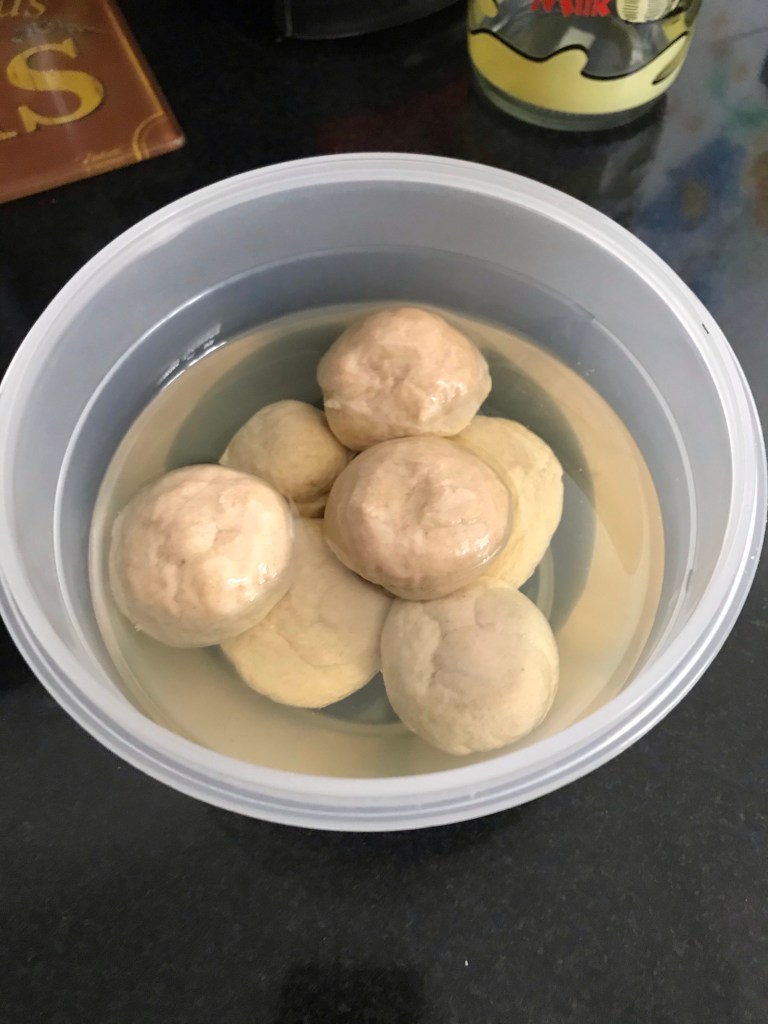
Add oil and salt to the wheat flour and knead well to make a soft dough using as much water as needed. I followed this recipe for Godamba Roti, but modified the quantities of the ingredients as I did not want to make as many rotis.
Make lemon-sized balls and soak them in oil for seven hours.
Spread on a flat surface using your fingers.
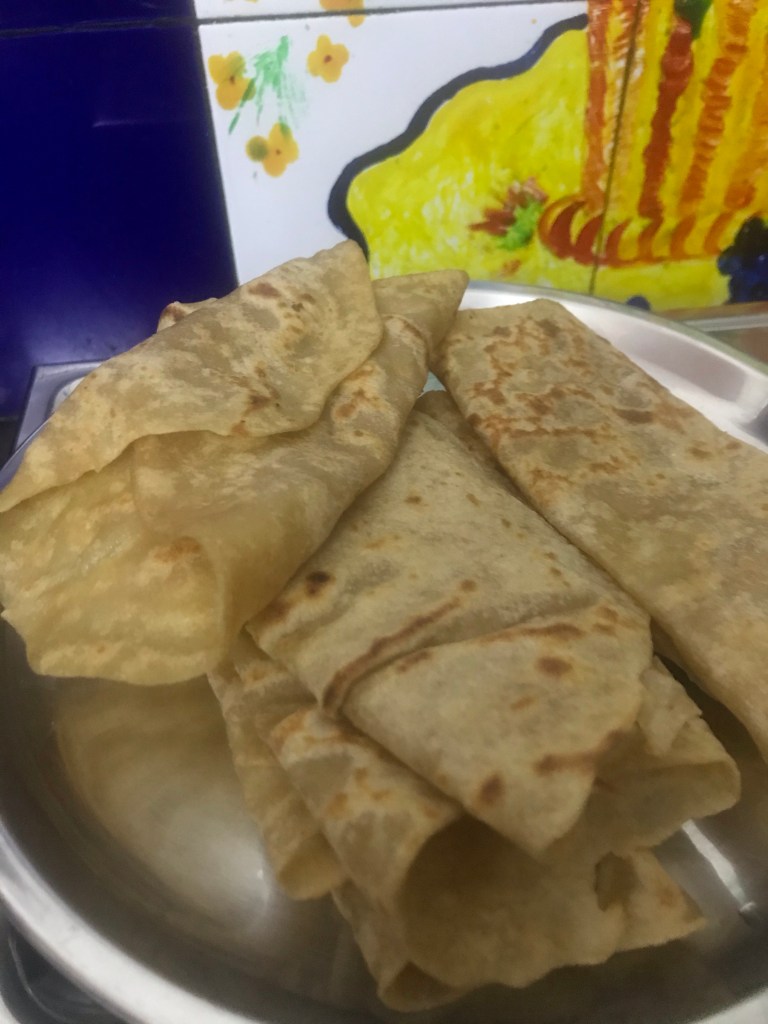
Toast on a hot tawa or griddle. I used Futura’s nonstick tawa. It works best.
Add some of the chopped onions, tomatoes and green chillies to the eggs with salt and whisk briskly. Scramble in a hot frying pan with 1 tsp of oil.
Snip the Roti into ribbons using a pair of kitchen scissors.
In a wide heavy-bottomed pan, take 3 tablespoons of oil. Add the onions, cabbage, carrots, green chillies, curry leaves and spring onions and stir fry on high heat. Add tomatoes and some salt. Be careful not to add too much because the chicken and the scrambled eggs already contain salt.
Add the chicken and the shredded roti. Add the masala that was made for the Sri Lankan Chicken Curry.
Add the scrambled eggs and toss well to mix everything.
Serve hot. This dish needs no accompaniments. It is a highly nutritious and satisfying dish by itself.
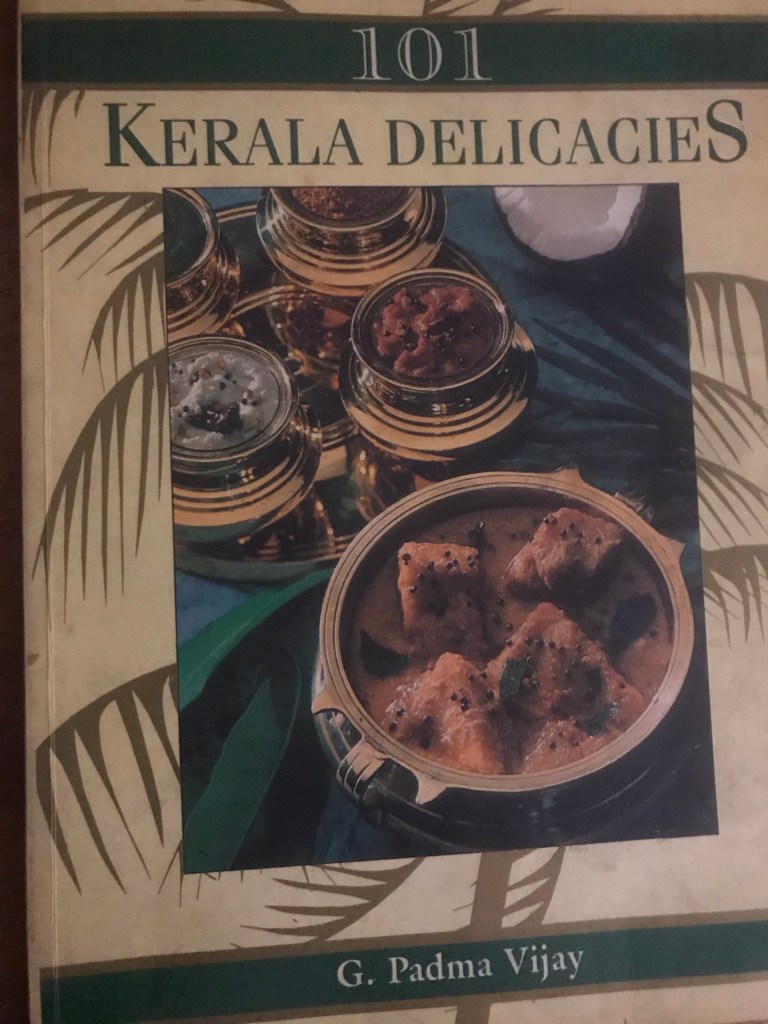
This has been my go-to book for decades. I reviewed it for the Times of India and that is how it came into my life. I think I have tried every dish in it and over the years, through experimentation, have honed each one of them to suit my palate.
That is the beauty of this book. The recipes are simple and easy to follow. They form the basic building blocks from which you can craft a country cottage or a castle according to your taste.
The book is divided into 12 chapters, including Pickles & Chutneys, Vegetarian Dishes, Prawn Dishes, Fish Dishes, Egg & Chicken Dishes, Mutton Dishes, Pork Dishes, Snacks, and Desserts & Sweets. Some of my favourite recipes include Chemmeen Achar (Prawn Pickle), Muringakai Theeyal made of the superfood moringa, Koorka Curry made of Chinese potaoes, Kozhierchi Varthada (Chicken Roast) and the Muslim dish Pathri (Rice Roti).
The book does not claim to encompass the entire cuisine of Kerala, but it has some of the main dishes from every part of the meal.
One disadvantage, however, is that the translation of the names of the dishes from Malayalam to English might still leave many readers scratching their heads. For example, in the recipe given above, Vazhakka and Payar have been translated, but though raw banana is clear, how many will know what chauli is? It would have been infinitely easier to describe it as black eyed peas. Also chauli refers to the fresh vegetable in some parts of India.
Similarly, koorka is familiar to those who speak Malayalam, but not to many others. Translating it as koorka in English is not really helpful. The vegetable that is from Africa and grows very well in Kerala is known as Chinese potato or Plectranthus rotundifolius, to give it its botanical name. There is a glossary at the beginning of the book, but it would have been more useful to have the English translations next to the Malayalam names.
One of my favourite recipes in the book is for Kozhierchi Porichadu (Fried Chicken). The well-thumbed page attests to how often I have used it. After all, this book belongs to a phase in my life when Facebook was not even a twinkle in the eye and even the World Wide Web was in its nascent stages.
The first time I ate this dish, Mushroom Fry Up, was almost 30 years ago on my first visit to London, when my aunt made it for breakfast. She served it with sausages and it was delicious. I have been making it ever since. It became a favourite in my family for Sunday breakfast.
Best breakfast combo
Ingredients
Mushrooms 250 g Onion 1 large Salt to taste Pepper to taste Oil 1 tbsp
Method
Slice the mushrooms and onions. I use button mushrooms for this dish.
Finely sliced mushrooms and onions
Pour the oil to a heated frying pan and add the mushrooms and onions. Fry till the water released from the mushrooms dries up.
Turn off the heat and add salt and pepper.
Fry the sausages in the same pan. Once the sausages are done, fry the tomato halves in the same pan.
I was not a big fan of the bottle gourd or any member of the squash family. Till I got a bumper crop from the garden and the fresh bottle gourd with firm fleshy white meat and no seeds or very tender seeds turned me into a fan. The only dish I would make from bottle gourd or lauki was kofta curry. Then I tried my hand at this humble dal and surprised myself at how tasty it turned out. Using chana dal (split Bengal gram) gives the dish a lovely creamy texture.
Creamy and wholesome
Ingredients
(Serves 4 persons)
Bottle gourd or lauki 1 1/2 cups, peeled and cubed Chana dal 1/4 cup Onion 1, chopped Tomato 1 large, chopped Mustard seeds 1 tsp Garlic 4 cloves, chopped Red chilli powder 1 tsp Coriander powder 1 tsp Turmeric 1/2 tsp Salt to taste Oil 1 tbsp Coriander leaves a few sprigs, chopped Mint a few leaves
Method
Soak the chana dal in water for 30 minutes. Drain.
Add oil to the pressure cooker and sputter the mustard seeds. Add the onions and fry till they turn translucent. Add the garlic and fry for a few seconds. Add the tomatoes and fry till they soften. Add the spices. Saute for 1 minute.
Add the chana dal and the cubed lauki. Add salt and mix well. Fry for two minutes. Add enough water to cover the dal. Close the lid and let it cook on high flame for one whistle and on low flame for four whistles. Switch off the heat and let the pressure cooker cool.
Take the lid off and check the gravy. If needed, heat it till the gravy thickens.
Garnish with coriander leaves and mint and serve hot with rice or bread.
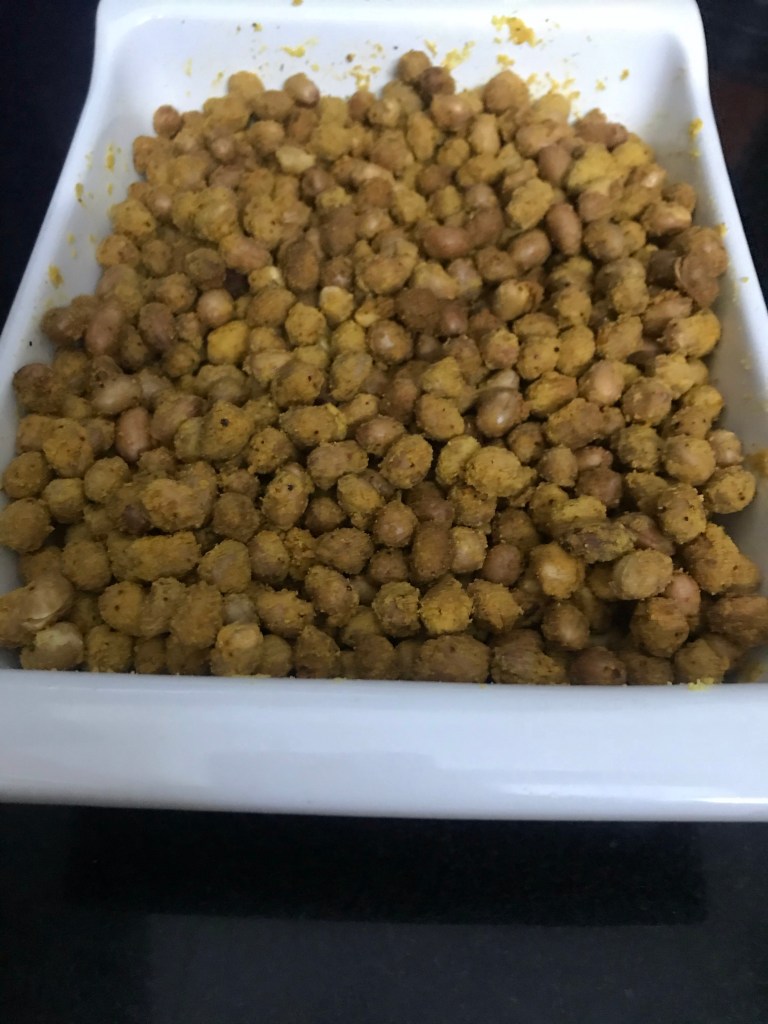
Peanuts are my weakness. I can have it in any form — raw peanuts made into a Thai curry, crushed in a Maharashtrian salad, salted like those sold outside movie theatres in Kerala when we were kids, or made into snacks à la Haldiram or Bikano. This snack where raw peanuts are coated with chickpea flour and fried is a favourite. I have, however, made it healthier using the microwave, using just one tablespoon of oil.
Healthy version of the old fried favourite
Ingredients
Raw peanuts 250 g Chickpea flour (besan) 5 tbsps Salt 2 tsp Red chilli powder 1 tbsp Sundrop vegetable oil 1 tbsp
Method
Soak the peanuts in water for five minutes. Drain and keep aside.
In a microwave safe dish mix the chickpea flour, red chilli powder and salt.
Add the drained peanuts and oil and mix well.
Microwave for two minutes. Take the dish out and stir the peanuts to break up any lumps. Microwave again for two minutes.
Repeat this till the raw smell of the flour is gone and the peanuts are crispy. The colour will change from yellow to medium brown.
After 4 minutesWhen done
The peanuts should be ready in about eight minutes.













 Chills & Chillies